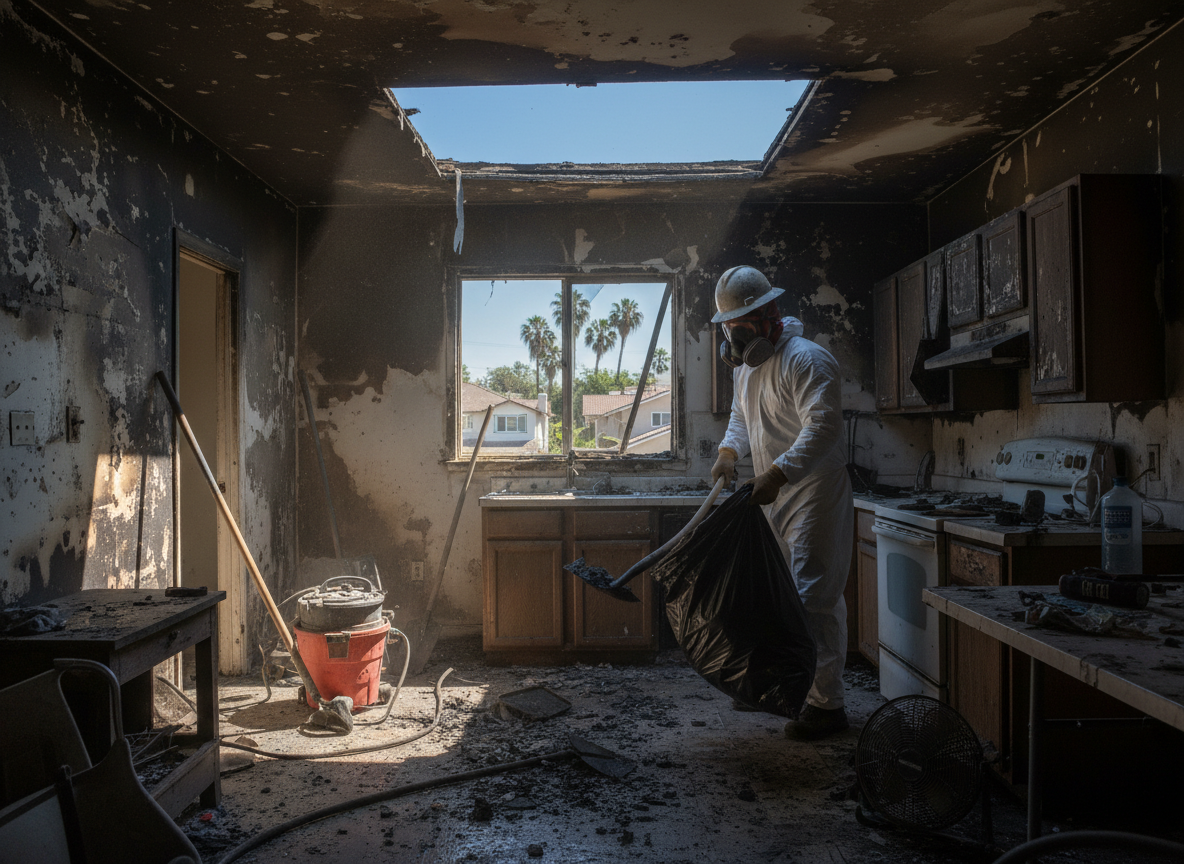
Apartment fire cleanup in Encino often involves older multi-unit buildings along Ventura Boulevard where plaster walls and original hardwood floors trap soot deeply. Hot-summer Mediterranean conditions mean dry summers increase smoke penetration through shared vents and attics before winter rains arrive. Crews must isolate HVAC systems quickly to prevent soot migration into neighboring units in Lake Encino and South Encino complexes. Residue from synthetic furnishings requires specialized pH-neutral cleaners to avoid etching surfaces common in 1960s and 1970s construction.
Edge cases appear frequently near Encino Park where hillside properties have steeper rooflines that channel smoke upward into top-floor apartments. Los Angeles building codes require documentation of all affected units before drywall removal, especially when fire spreads through common walls. Technicians check for hidden charring in electrical runs and insulation, since post-fire moisture from suppression water can lead to mold if not dried within 48 hours under the region's variable humidity swings.
Cleanup sequences prioritize contents removal first, bagging textiles and electronics before surface cleaning begins. In buildings close to Woodland Hills and Tarzana, traffic delays on the 101 can extend response times, so on-site crews stage equipment at the Ventura Blvd address for faster deployment. Odor neutralization uses hydroxyl generators rather than ozone in occupied apartments to protect residents with respiratory sensitivities common in older Encino stock.
Technician insight
In Encino, the thing that catches most people out with Apartment fire cleanup is how quickly soot travels through the shared attic spaces in 1970s buildings along Ventura Boulevard, especially when summer winds push it into units near Los Encinos State Historic Park before we can contain it.
Smoke Migration in South Encino Complex
A kitchen fire in a second-floor apartment near Encino Park sent soot through ceiling vents into three upper units. Inspection revealed heavy residue in original plaster and HVAC ducts. Crews isolated the system, removed contents for cleaning, and dried water from suppression before mold set in during the following wet period. Residents returned after three weeks with no lingering odors.
How it works
- 1
Initial Assessment
Technicians inspect all affected apartments for smoke migration paths through vents, shared walls, and attics while documenting damage for Los Angeles code compliance.
- 2
Containment and Safety
Plastic barriers and negative air machines isolate the unit to stop soot spread into hallways and neighboring units in multi-story Encino buildings.
- 3
Contents Removal and Cleaning
Personal items are inventoried, bagged, and moved off-site for specialized cleaning while surfaces receive pH-adjusted treatments for different residue types.
- 4
Structural Restoration
Charred materials are removed, cavities dried, and surfaces prepped for repairs with attention to older plaster and hardwood found in South Encino apartments.
- 5
Final Verification
Air quality and surface testing confirm no lingering odors or residues before residents return, with follow-up checks during the first dry season.
Pricing
Upfront quotes provided after on-site inspection of soot depth, affected square footage, and contents volume.