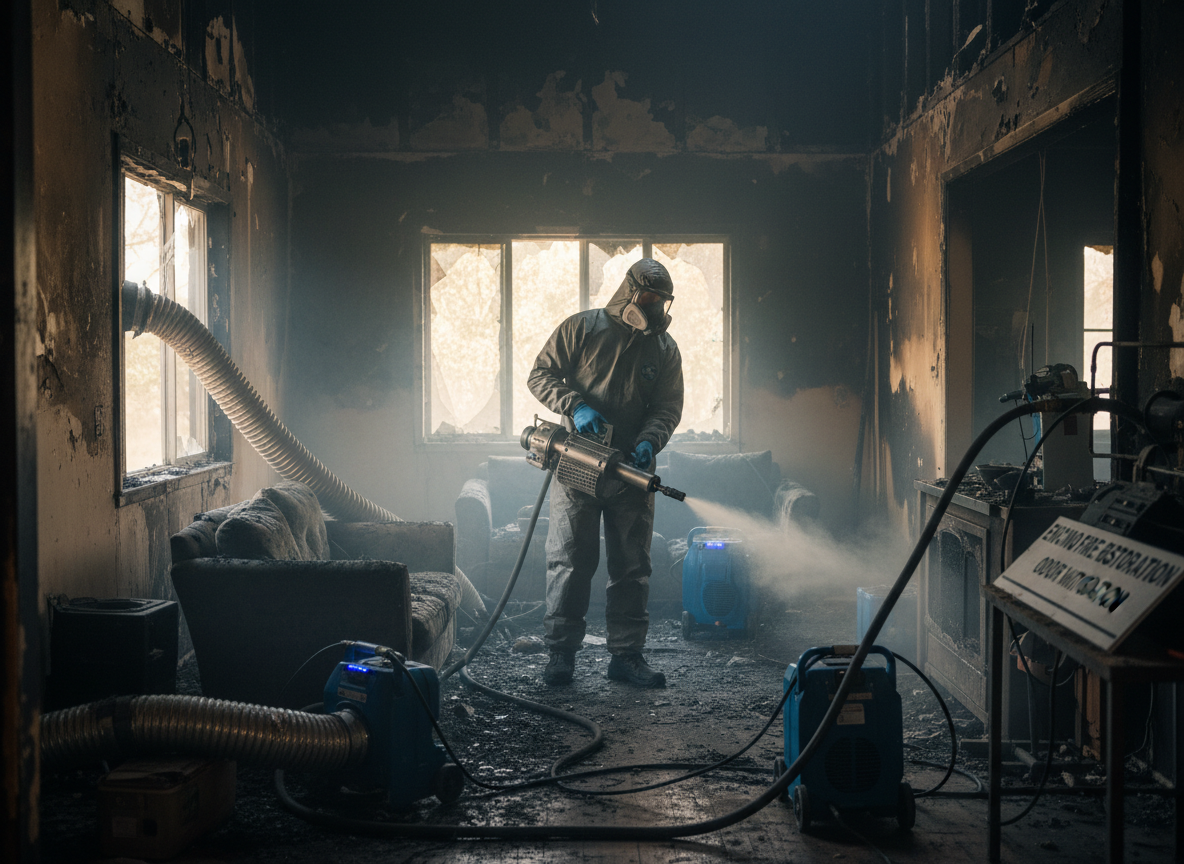
Smoke from structure fires settles into the lath-and-plaster walls common in Encino homes built before 1960, especially those near Encino Park and along Ventura Boulevard. Hot, dry Mediterranean summers pull residual moisture from building materials, locking odors into insulation and hardwood floors that standard cleaning misses. Technicians use penetrating fogging agents and negative-air machines to reach voids behind baseboards without tearing out intact sections, then verify clearance with olfactory and instrument checks before homeowners return.
Lake Encino and South Encino properties often sit on sloped lots that create stack-effect airflow, pulling smoke upward into attics during fires. This pattern requires sealing soffits and ridge vents first, then treating HVAC ducts that run through shared walls with neighboring homes in the Los Angeles County foothills. Failure to address these paths leaves odors returning during the next Santa Ana wind event when pressure differentials increase.
Woodland Hills and Tarzana homes nearby share similar construction, but Encino’s older stock frequently has multiple layers of paint over original plaster, trapping particulates that re-volatilize with temperature swings. Crews test each layer before applying thermal fog or ozone, documenting which surfaces can be cleaned in place versus those needing removal to meet Los Angeles County air-quality guidelines for re-occupancy.
Technician insight
In Encino, the thing that catches most people out with Odor removal after fire is how the dry Mediterranean summers pull moisture from lath-and-plaster walls along Ventura Boulevard, setting smoke deeper than in newer Sherman Oaks builds. Homeowners often paint over the smell and think the job is done, but the first heat wave re-releases it from behind the baseboards.
South Encino Two-Story Odor Job
Smoke from a kitchen fire traveled up a shared chase into the second-floor bedrooms. We found heavy odor retention in the original plaster and attic insulation. After sealing the HVAC and running targeted fogging for two days, the family moved back in with no detectable smell even during the next hot spell.
How it works
- 1
Initial Assessment
Walk every room, attic, and crawl space to map smoke migration paths created by the home’s original construction and recent weather patterns.
- 2
Containment Setup
Isolate affected zones with plastic barriers and negative pressure to prevent odor migration into unaffected areas of the Encino residence.
- 3
Source Removal and Cleaning
Remove charred materials, then apply specialized cleaners to porous surfaces before introducing odor-neutralizing agents.
- 4
Treatment and Verification
Deploy thermal fogging or ozone equipment, followed by repeat sensory and air-sample testing until no smoke odor remains detectable.
Pricing
Cost depends on square footage treated, number of affected levels, and whether HVAC ducts require separate cleaning.