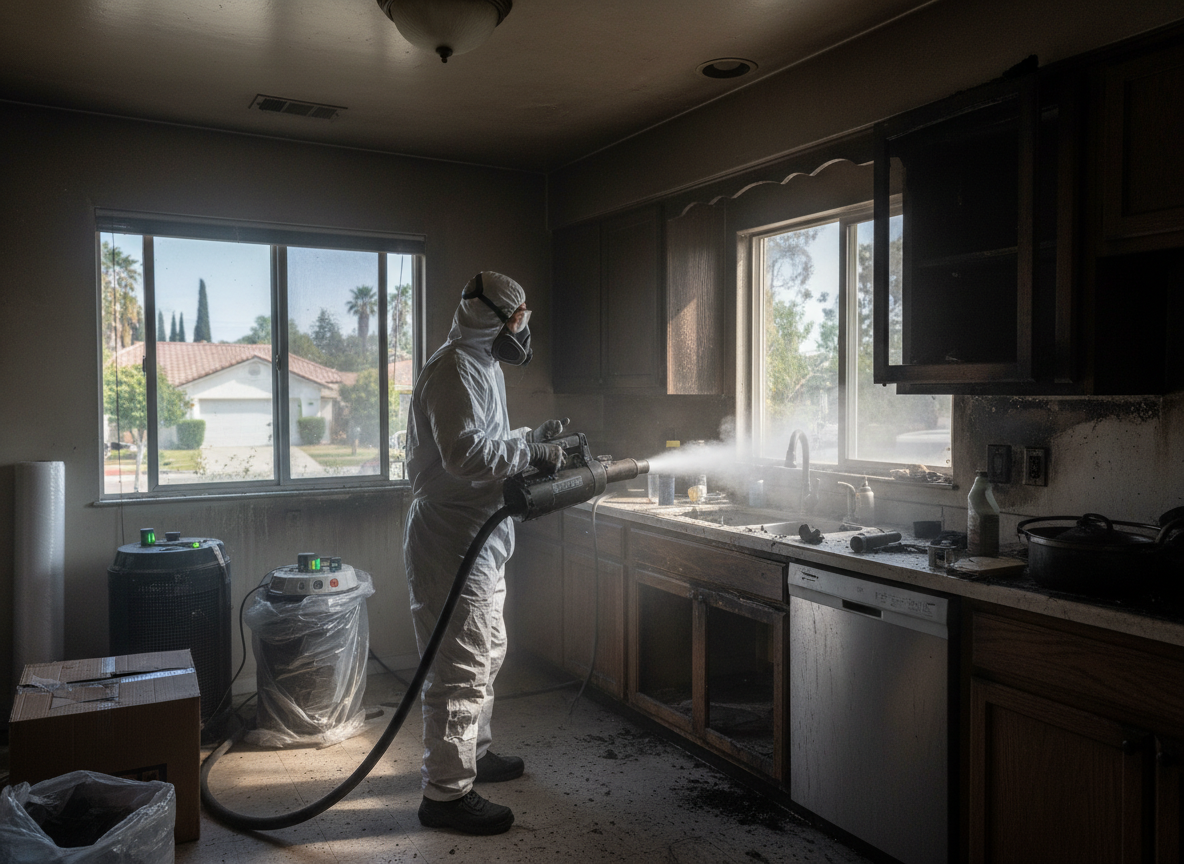
Smoke damage in Encino homes often penetrates older plaster walls and hardwood floors common in properties near Ventura Boulevard and Los Encinos State Historic Park. The area's hot-summer Mediterranean climate brings dry Santa Ana winds that carry fine soot particles deep into attics and wall cavities, making surface cleaning insufficient. Technicians must use specialized HEPA filtration and thermal fogging to reach residues that standard methods miss, especially in homes built before modern insulation standards.
In neighborhoods like Lake Encino and South Encino, HVAC systems frequently spread smoke odors throughout multi-story houses after nearby fires in Sherman Oaks or Tarzana. Porous materials such as carpet padding and drywall absorb acidic compounds that cause ongoing corrosion if not neutralized within days. Restoration crews test pH levels on affected surfaces and apply alkaline sealers only after confirming no hidden moisture from suppression efforts remains, preventing mold growth in the region's variable humidity.
Los Angeles County building codes require proper disposal of contaminated materials during smoke restoration, particularly when dealing with lead-based paint in pre-1978 Encino structures. Crews isolate work zones with negative air pressure to avoid cross-contamination into unaffected rooms, a critical step when working near high-traffic areas like Encino Park. Homeowners in Woodland Hills often overlook secondary damage to electronics and fabrics until odors return weeks later.
Technician insight
In Encino the thing that catches most people out with smoke damage restoration is how quickly soot gets into the lath-and-plaster walls of 1950s homes near Ventura Boulevard. Once it settles behind the surface you cannot just wipe it; the dry Mediterranean winds pull it right back out weeks later if you skip proper sealing.
South Encino Home After Nearby Brush Fire
Smoke from a small fire in adjacent hills entered a 1960s ranch house through open windows. We found acidic soot coating the HVAC coils and inside wall cavities. After full duct cleaning, alkaline sealing of plaster surfaces, and ozone treatment the odors disappeared and the family returned without further issues.
How it works
- 1
Initial Assessment
Technicians inspect all affected rooms, test surfaces for soot type, and document smoke migration paths through the home's structure.
- 2
Containment and Air Filtration
Negative air machines and plastic barriers prevent soot spread while HEPA units capture airborne particles in Encino homes.
- 3
Soot Removal and Cleaning
Specialized sponges and vacuums remove residues from walls, ceilings, and contents without spreading particles further.
- 4
Odor Neutralization
Thermal fogging and ozone treatments target embedded smoke odors in porous materials common to older Los Angeles County properties.
- 5
Final Verification
Air quality testing and visual inspection confirm no lingering residues before returning the property to the owner.
Pricing
Costs depend on the volume of affected space, depth of soot penetration into building materials, and whether HVAC cleaning is required.