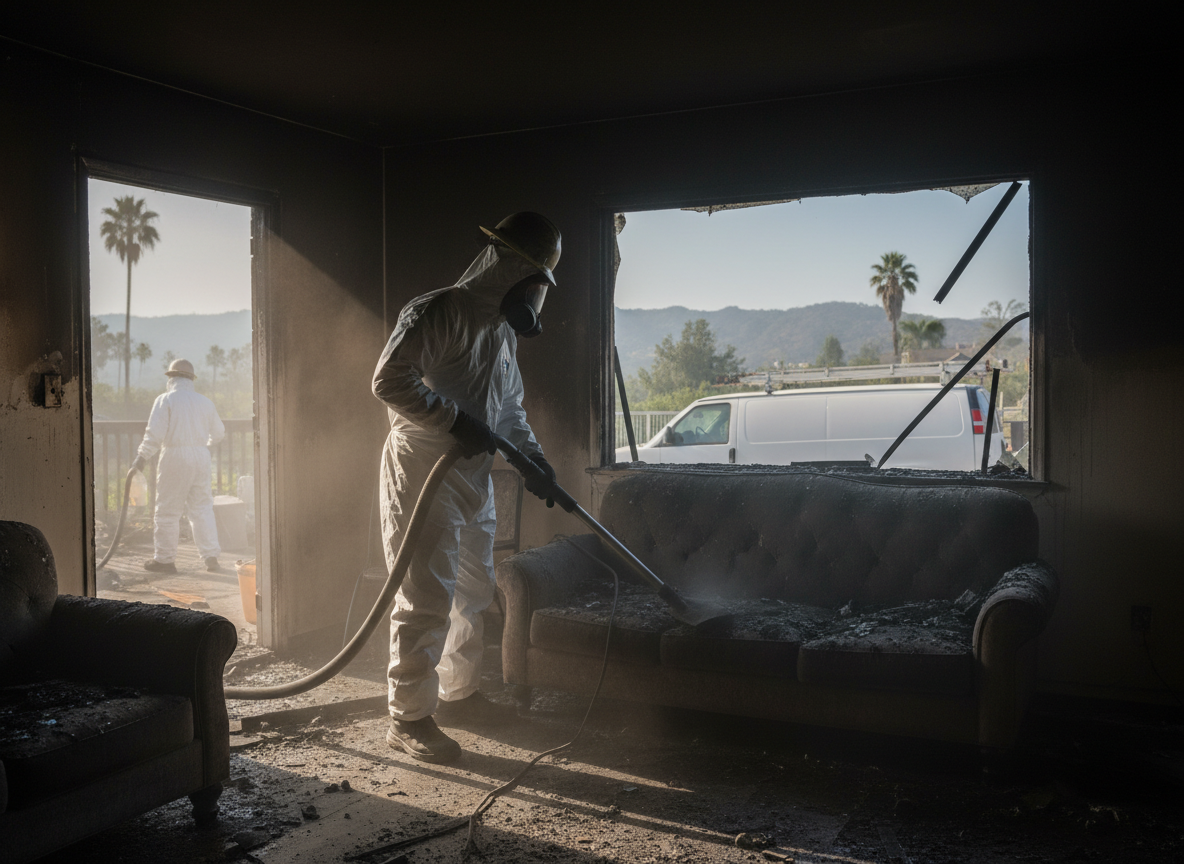
Encino sits in a hot-summer Mediterranean climate where long dry periods turn ash into fine, airborne powder that penetrates stucco walls and older wood framing common in South Encino and Lake Encino neighborhoods. Cleanup crews must isolate HVAC systems quickly because soot travels through ducts in homes built before modern fire codes, especially near Ventura Boulevard where many mid-century structures still stand. Failure to address embedded residue in concrete slabs or tile grout leads to recurring odors months later.
Los Angeles County regulations require proper disposal of contaminated materials, and crews working around Los Encinos State Historic Park must contain runoff to protect local soil conditions. In Encino Park-adjacent properties, crews often encounter layered flooring that hides hidden char, requiring careful removal without disturbing original hardwood. Nearby Tarzana and Woodland Hills jobs frequently involve similar hillside drainage issues that complicate water extraction after suppression efforts.
Technicians start by mapping smoke migration patterns unique to Encino’s prevailing winds, then use HEPA filtration and negative air machines sized for the square footage. Residue on kitchen cabinets or attic insulation demands material-specific cleaners to avoid damaging finishes common in local construction. Final clearance testing confirms no lingering particulates before homeowners return.
Technician insight
In Encino, the thing that catches most people out with Fire damage clean up is how quickly the dry Mediterranean air turns fresh ash into dust that settles into the gaps between original hardwood floors and baseboards in homes along Ventura Boulevard.
Kitchen Fire Residue in South Encino Home
A kitchen fire left heavy soot on cabinets and in the attic insulation of a 1960s house near Encino Park. Inspection showed particles had entered the HVAC and settled under layered flooring. Crews isolated the system, removed contaminated insulation, cleaned all surfaces, and ran clearance tests before the family moved back in.
How it works
- 1
Initial Assessment
Technicians inspect all affected rooms, HVAC, and hidden cavities to document soot depth and material damage.
- 2
Containment Setup
Plastic barriers and negative air machines isolate the work zone to prevent cross-contamination into unaffected areas.
- 3
Soot and Ash Removal
HEPA vacuums, specialized sponges, and approved cleaners lift residue from surfaces without spreading particles.
- 4
Odor Neutralization and Clearance
Ozone or hydroxyl treatments followed by air quality checks ensure the space meets return-to-occupancy standards.
Pricing
Upfront quotes issued after on-site inspection; final cost depends on square footage, material types, and hidden damage discovered during cleaning.