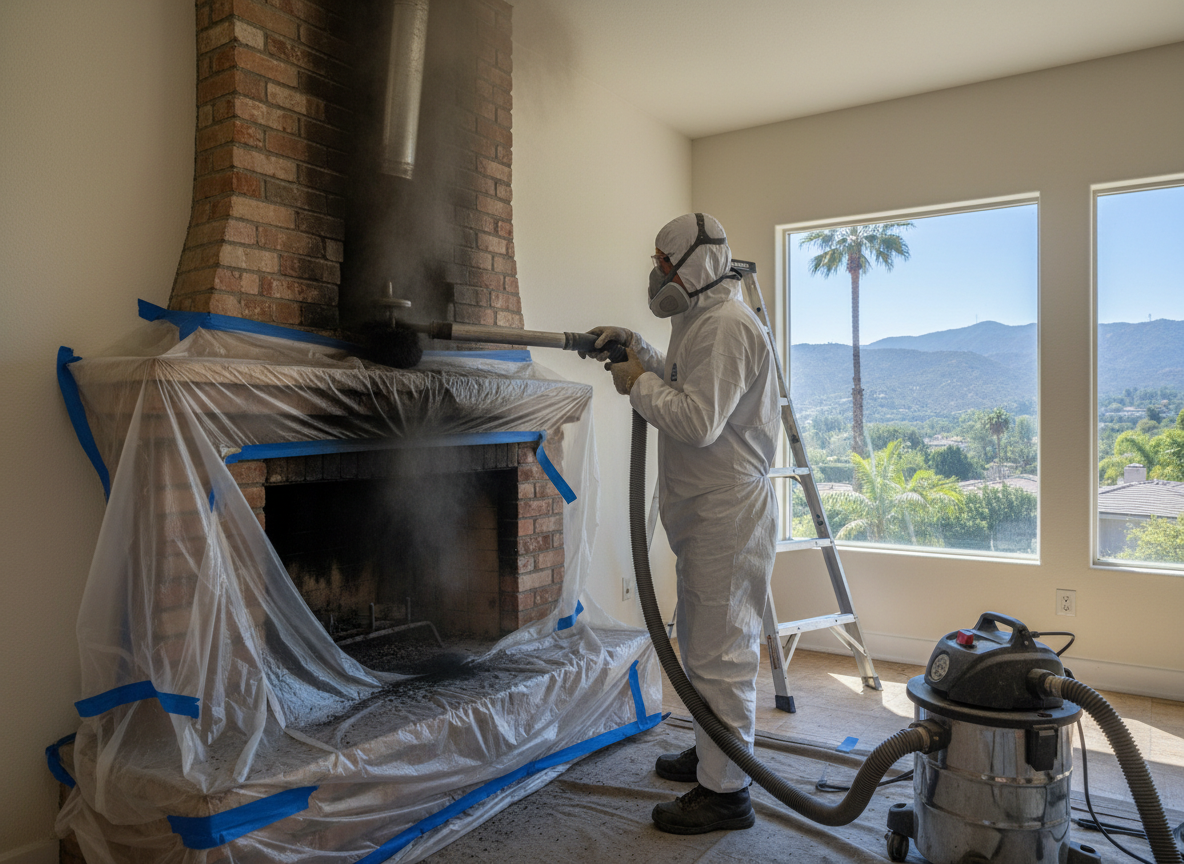
Soot from structure fires in Encino often settles into the textured stucco exteriors and older hardwood floors common in homes built along Ventura Boulevard and near Los Encinos State Historic Park. The hot-summer Mediterranean climate keeps air dry for months, allowing fine carbon particles to remain airborne longer and penetrate deeper into porous materials like plaster and insulation. Technicians must use HEPA filtration and negative air machines to prevent redistribution during cleaning, especially in single-story ranch homes typical of South Encino and Lake Encino.
In Encino properties, soot frequently travels through HVAC ductwork shared with neighboring homes in the flat terrain near Encino Park. Residues from synthetic furnishings common in post-1960s builds create acidic deposits that etch metal fixtures and discolor tile if not neutralized within days. Crews test pH levels on surfaces before applying specialized emulsifiers, then rinse with controlled moisture to avoid warping original wood trim found in many Ventura Boulevard corridor residences.
Edge cases arise after kitchen fires in Tarzana-adjacent Encino homes where grease-laden soot bonds to cabinetry and requires solvent-based cleaners rather than water. Los Angeles building codes require documentation of cleaning methods when soot reaches shared walls in townhome developments. Skipping proper containment can spread odors into adjacent units, forcing additional remediation in neighboring properties along the same block.
Seasonal Santa Ana winds common in the region can reintroduce outdoor soot into recently cleaned interiors if windows remain unsealed during the dry season. Restoration teams coordinate with local property managers to schedule work around peak heat hours to maintain safe indoor conditions while equipment runs.
Technician insight
In Encino the thing that catches most people out with soot removal is how quickly dry Mediterranean air lets fine particles travel through the shared attics of 1950s-70s homes near Ventura Boulevard. Homeowners often wipe visible surfaces and think the job is done, but acidic residues stay in the insulation and later etch metal vents when the first Santa Ana winds hit.
Kitchen fire soot in South Encino ranch home
Grease and plastic soot from a stove fire migrated through ceiling vents into bedrooms. Inspection showed acidic residue on original wood beams and inside the HVAC return. We isolated the system, cleaned ducts and surfaces with solvent emulsifiers, then neutralized and tested before homeowners returned.
How it works
- 1
Initial Assessment
Inspect all affected rooms, test surfaces for pH and residue depth, and document soot migration paths through HVAC and attic spaces in Encino homes.
- 2
Containment Setup
Install plastic barriers and negative air machines to isolate soot from unaffected areas, particularly important in older Encino ranch homes with open floor plans.
- 3
Surface Cleaning
Apply pH-neutral or solvent cleaners based on residue type, agitate with soft brushes, and extract using HEPA vacuums on walls, ceilings, and contents.
- 4
HVAC and Hidden Area Treatment
Clean ducts and attics where soot has traveled, then verify removal with white glove and black light inspections before final clearance.
- 5
Odor Neutralization
Apply thermal fogging or ozone treatment only after visible soot is gone to eliminate embedded smoke odors in porous materials.
Pricing
Cost depends on square footage affected, soot type, and whether HVAC cleaning is needed; upfront quotes provided after on-site assessment.