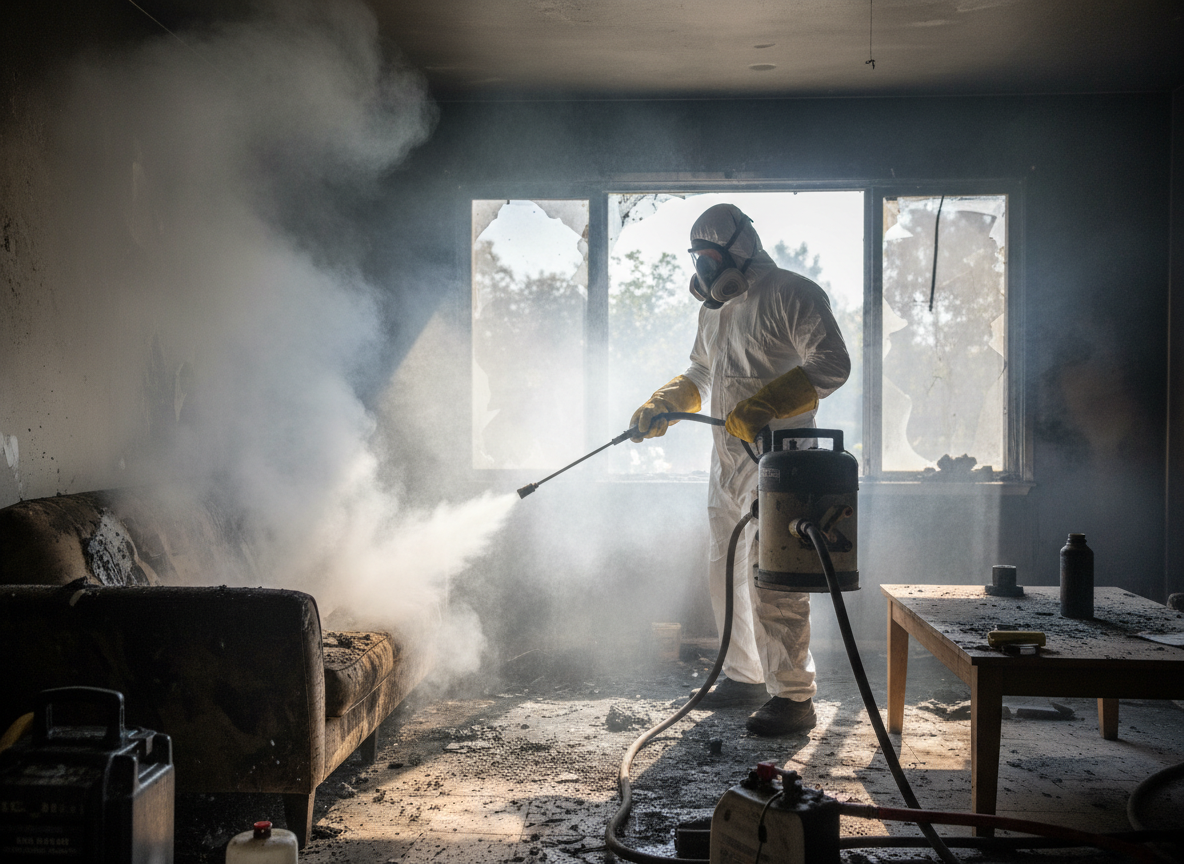
Encino's mid-century stucco and wood-frame homes along Ventura Boulevard often feature plaster walls and original HVAC systems that allow smoke to travel far beyond the fire room. In a hot-summer Mediterranean climate, low humidity and occasional Santa Ana winds push fine soot particles deeper into porous materials like insulation and hardwood floors common in Lake Encino and South Encino neighborhoods. Standard cleaning fails here because alkaline soot bonds to surfaces within hours, requiring pH-neutral agents and HEPA filtration to avoid etching or spreading residue.
Los Angeles County building codes require proper disposal of contaminated materials and ventilation checks after any fire event. Smoke remediation crews must isolate affected zones quickly to prevent cross-contamination into unaffected areas like attics or attached garages, which are frequent in Tarzana and Woodland Hills border properties. Edge cases include hidden soot in electrical boxes or behind built-in cabinetry, where incomplete removal leads to recurring odor when temperatures rise in summer.
Technicians test surfaces for pH levels and use air scrubbers with activated carbon to neutralize odors that linger in older Encino Park-area homes. Failure to address both visible soot and microscopic particles often results in failed insurance inspections or health complaints from residents returning too soon.
Technician insight
In Encino the thing that catches most people out with smoke remediation is how the dry climate and older plaster walls around Los Encinos State Historic Park let smoke travel into wall cavities that never fully dry without targeted dehumidification.
Kitchen Fire Smoke in South Encino
A kitchen fire sent smoke through the central air system of a 1960s home near Encino Park. We found heavy soot deposits inside the ductwork and behind baseboards. Specialized vacuuming and pH-balanced cleaning removed residue from plaster and hardwood while neutralizing odors. The family returned after clearance testing showed safe air quality.
How it works
- 1
Initial Assessment
Inspect all affected rooms, HVAC runs, and attic spaces to map smoke migration patterns specific to Encino construction.
- 2
Containment and Ventilation
Set up negative air pressure and seal doorways to stop soot from moving into clean areas of the home.
- 3
Surface Cleaning
Apply appropriate cleaners to walls, ceilings, and contents while protecting original woodwork and tile found in local homes.
- 4
Odor Neutralization
Deploy thermal fogging or ozone treatments followed by HEPA air scrubbing until readings confirm clearance.
Pricing
Cost depends on square footage affected, depth of soot penetration, and whether HVAC cleaning is required. Upfront quotes provided after inspection.