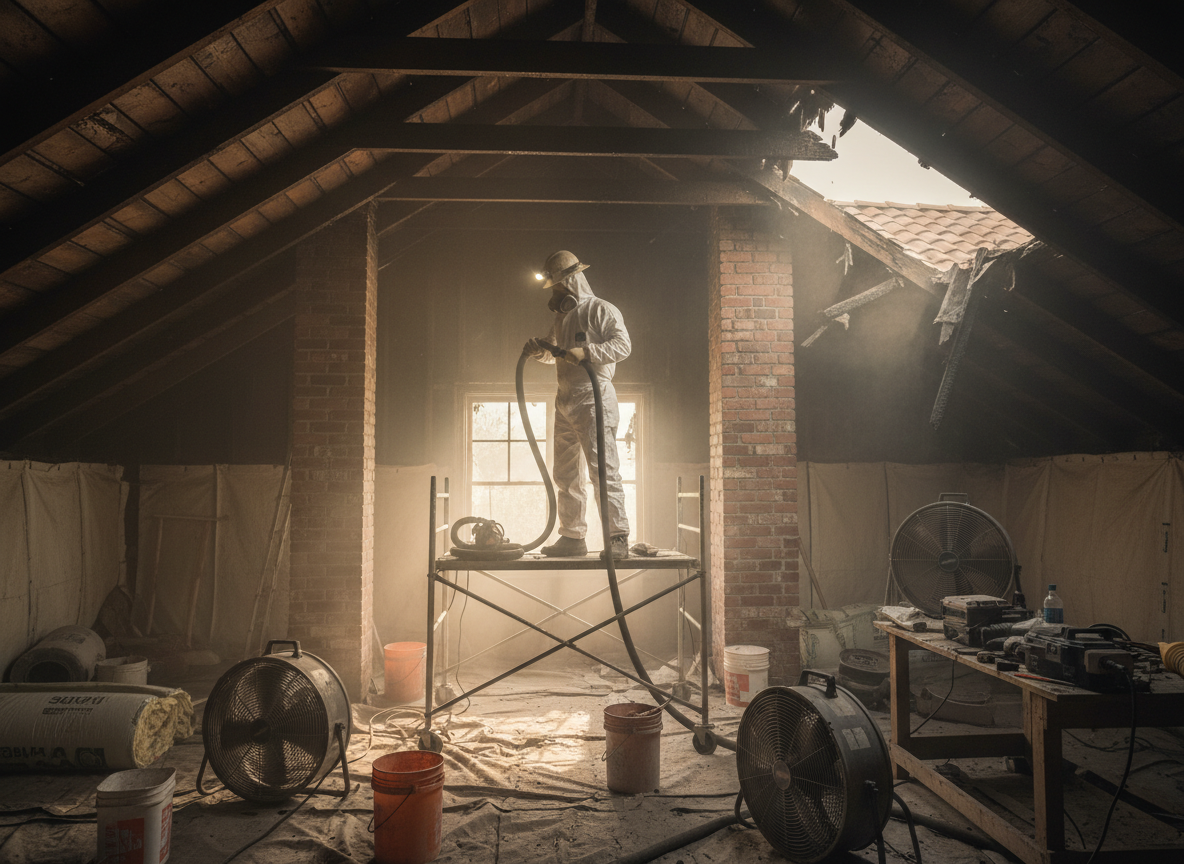
Attic fires in Encino often start from electrical faults in homes built during the post-war boom along Ventura Boulevard and in South Encino. These properties frequently contain older insulation materials and knob-and-tube wiring that allow flames to travel unseen between rafters. Restoration crews must first isolate the fire origin, then remove charred batts and blown-in cellulose while protecting the living spaces below from falling debris. Hot-summer Mediterranean climate conditions mean dry summers increase ember risk, so technicians check for hidden pockets near chimneys and recessed lighting before beginning reconstruction.
Los Encinos State Historic Park and nearby Lake Encino neighborhoods feature hillside lots where access to attics can be restricted by steep rooflines and limited crawl space. Restoration work here requires temporary shoring of ceiling joists before insulation replacement to meet Los Angeles County building standards. Crews also ventilate the space to remove acidic smoke residues that can corrode metal fasteners over time. Coordination with local utilities is common when power lines run close to the roof edge, adding steps to the timeline.
After initial demolition, replacement materials must match existing R-values to satisfy current energy codes while preserving the original roof pitch typical of Encino ranch homes. Technicians document every layer removed for insurance purposes and test for lingering odors using air scrubbers placed at multiple attic vents. Final walkthroughs include checking soffits and ridge vents to ensure proper airflow returns before homeowners reoccupy the space.
Technician insight
In Encino, the thing that catches most people out with attic fire restoration is the way 1950s and 1960s ranch homes along Ventura Boulevard trap heat and embers in low-slope attics during our hot, dry summers, so a small kitchen fire can silently burn through insulation for hours before anyone notices.
Hidden Attic Damage in South Encino
A homeowner in South Encino noticed ceiling stains after a small electrical fire. Inspection revealed smoldering insulation spread across twenty feet of rafters near the original knob-and-tube wiring. Crews removed the affected materials, treated the wood, and replaced insulation while keeping the family in the home. Final testing confirmed no remaining odors or hot spots.
How it works
- 1
Initial Assessment
Technicians arrive within hours to map fire travel through the attic, identify structural compromise, and document all affected materials for the insurance adjuster.
- 2
Containment and Safety
Plastic barriers and negative air machines isolate the attic from living areas while crews remove hazardous debris and test for asbestos in older insulation.
- 3
Cleaning and Odor Removal
HEPA vacuuming, thermal fogging, and ozone treatment eliminate smoke residues from rafters, wiring, and remaining insulation before any reconstruction begins.
- 4
Restoration and Verification
New insulation and drywall patches are installed, followed by a final inspection confirming code compliance and clearance of all combustion odors.
Pricing
Costs depend on attic size, extent of hidden damage, and whether structural repairs are required; upfront written estimates provided after inspection.