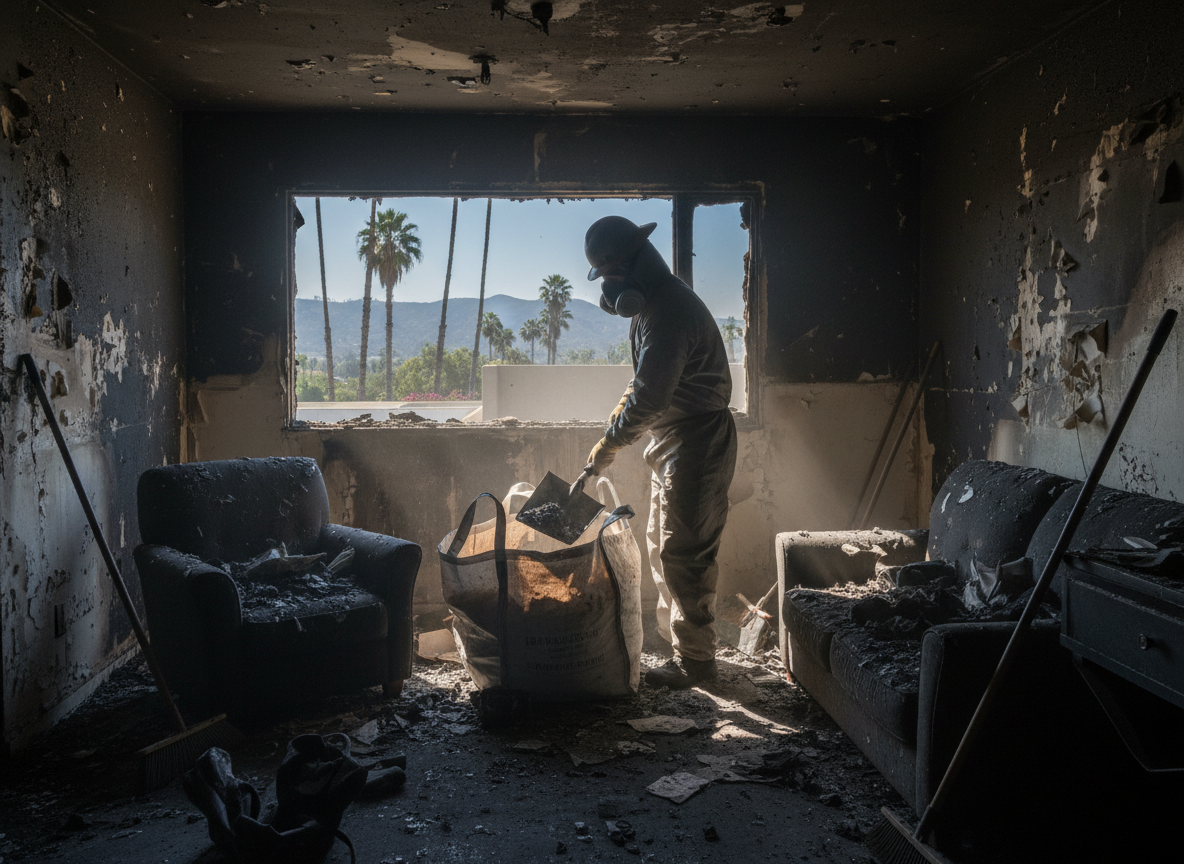
Tenant fire damage cleanup in Encino requires careful handling of older housing stock common throughout South Encino and Lake Encino, where post-war stucco and plaster walls absorb smoke deeply. Hot-summer Mediterranean conditions dry out materials quickly, making soot more stubborn on surfaces like hardwood floors and cabinetry found in homes along Ventura Boulevard. Crews must address HVAC systems that push residue into multiple units, especially in buildings near Encino Park, while following Los Angeles County rules for tenant-occupied spaces to avoid displacement issues.
Porous materials such as insulation and drywall in Encino rentals often need removal rather than cleaning when charring reaches framing, particularly after fires that start in kitchens or garages common to the area. Smoke from even small incidents travels through shared walls in multi-family properties bordering Sherman Oaks and Tarzana, requiring compartment testing to prevent odors returning during humid winter periods. Technicians document conditions for insurance adjusters and coordinate with property managers to restore habitability without disturbing neighboring tenants.
Edge cases include hidden soot in attics of hillside homes near Los Encinos State Historic Park, where terrain limits equipment access and increases time for containment. Warnings apply to electrical systems in pre-1970s builds, where residue can cause future faults if not fully extracted. Work stays limited to visible and accessible areas unless owners approve further demolition, keeping focus on safe reoccupancy for renters in Woodland Hills-adjacent zones.
Technician insight
In Encino, the thing that catches most people out with tenant fire damage cleanup is how dry summer heat pulls smoke into the plaster lath of 1950s homes along Ventura Boulevard, leaving residue that later migrates into adjacent rentals when the first Santa Ana wind hits.
Kitchen Fire Residue in South Encino Duplex
A cooking fire filled a South Encino rental with smoke that traveled through shared ducts into the upstairs unit. We found heavy soot on HVAC coils and inside wall cavities. Targeted extraction and duct cleaning removed the residue without full demolition, and the tenants moved back in after clearance testing.
How it works
- 1
Initial Assessment
Technicians inspect the rental unit for smoke paths, test surfaces, and note affected contents while documenting for the property owner.
- 2
Containment Setup
Plastic barriers and negative air machines isolate the fire area to stop soot spread into unaffected rooms or neighboring units.
- 3
Soot and Residue Removal
HEPA vacuums, chemical sponges, and approved cleaners treat walls, ceilings, and fixtures without damaging original plaster or woodwork.
- 4
Deodorization and Final Clearance
Fogging or ozone treatments neutralize odors, followed by air quality checks before tenants return.
Pricing
Pricing varies by affected square footage, smoke penetration depth, and whether contents require off-site cleaning.