2026-10-16 ·
How to Assess Smoke Damage in Encino Houses
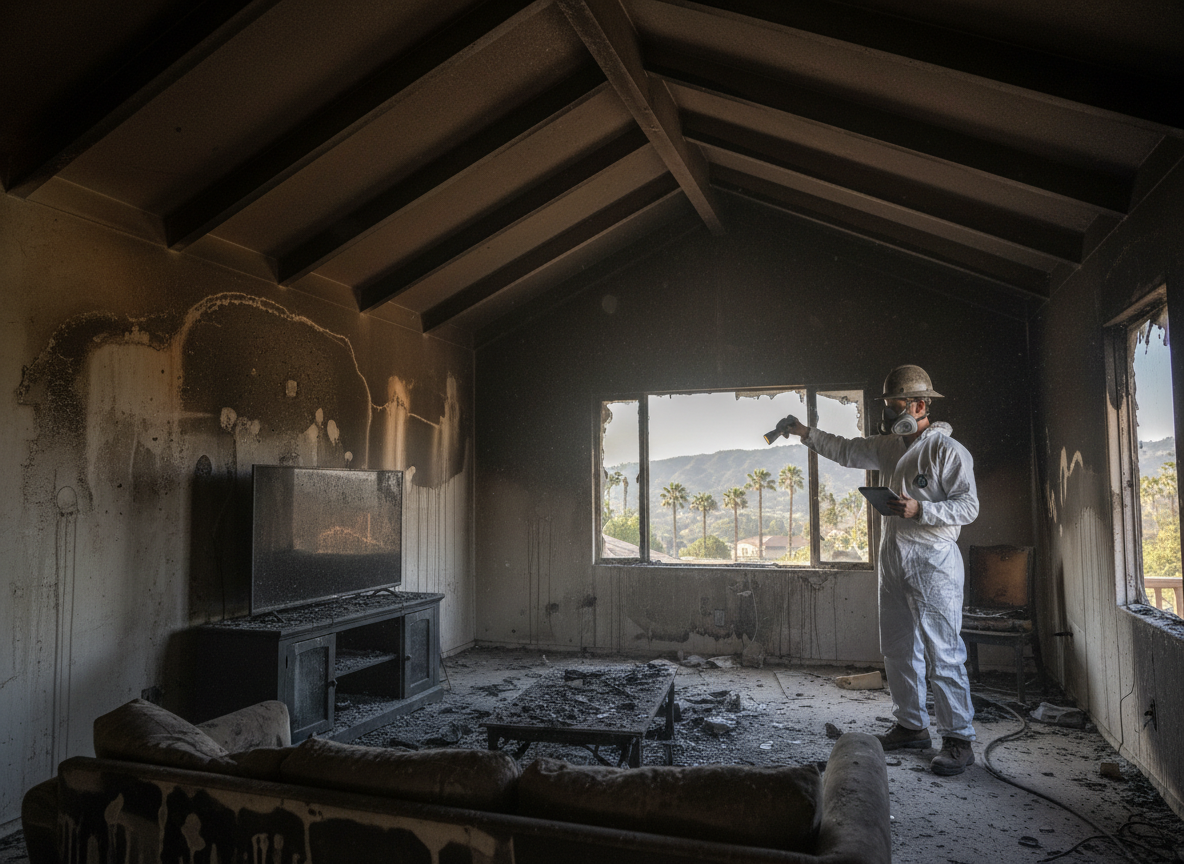
Assessing smoke damage in Encino houses begins with a systematic visual and olfactory inspection of every room, followed by checks for hidden residue in attics, walls, and HVAC systems that the region's hot-summer Mediterranean climate can make harder to detect.
Initial Visual Inspection
Start in living areas and bedrooms by examining walls, ceilings, and floors for soot patterns that often appear as fine black or gray films on painted surfaces and wood trim. In Encino homes built decades ago along Ventura Boulevard, these patterns frequently settle into textured ceilings and around electrical outlets where smoke travels through wiring chases. Check fabrics, carpets, and window treatments for discoloration that may range from yellowing to deep brown staining. Move methodically from the fire origin outward, noting any areas where smoke has migrated through open doors or HVAC vents into adjacent spaces like kitchens or garages. Document each affected surface with photos before touching anything to avoid spreading residue.
Checking for Odors and Hidden Residue
Odor detection requires closing windows and turning off fans, then walking through each room to identify lingering smoke smells that cling to insulation and drywall in South Encino properties. Use a flashlight to inspect behind appliances and inside closets where acidic smoke particles settle on metal and fabric. In Lake Encino neighborhoods with hillside homes, smoke often travels upward and collects in attics, so examine rafters and insulation for gray deposits that standard cleaning misses. If odors persist after basic airing, they indicate embedded residue that requires professional smoke remediation. Test porous materials like drywall by cutting a small sample in an inconspicuous spot to check for soot penetration beyond the surface layer.
HVAC and Structural Assessment
Examine the HVAC system by removing vent covers and inspecting ducts for soot accumulation that the Encino climate's dry winds can spread rapidly through the house. Older homes near Los Encinos State Historic Park often have ductwork from the 1960s or 1970s that traps particles in seams and bends. Check structural elements such as door frames and baseboards for warping caused by heat combined with smoke moisture. In Tarzana and Woodland Hills border areas, seasonal temperature swings can cause hidden residue to react with humidity and produce new odors weeks after the initial event. Note any electrical components that may have been compromised, as smoke corrosion on wiring connections creates long-term safety concerns.
When to Call Professionals
If residue appears on more than two rooms or odors remain after 48 hours of ventilation, contact specialists for targeted testing rather than attempting full cleanup yourself. Encino residents often link to odor removal after fire services when standard methods fail on concrete or stucco exteriors common in the area. Review related guidance in Insurance Claim Steps for Encino Fire Damage to document findings properly before remediation begins. For cost context, see Understanding Fire Restoration Costs in Encino to prepare for potential scope of work.